My Approach: Connect – Understand – Guide
“Behavior support” can mean very different things. Here is exactly how I practice, what each commitment means, and what it looks like when we work together.
Connection Comes First
Meaningful and lasting change begins with connection. Before teaching new skills or addressing challenging behaviour, children need to feel safe, understood and valued.
By building trust, following the child’s interests and responding with compassion, we create the foundation for learning. When connection comes first, children are more receptive to support, and positive behaviour change is more likely to be sustainable over the long term. When we know we have a solid connection to return to, it is easier to work through the difficult times when faced with behaviors of concern.


What Is Positive Behavior Support (PBS)?
Positive Behavior Support is an evidence-informed, person-centred and rights-based approach that seeks to understand what a child’s behavior may be communicating and the experiences, relationships and environmental factors influencing it.
In my practice, I work collaboratively with children, their families and other professionals to build connection, create supportive environments and teach meaningful skills in communication, emotional regulation and independence. The goal is to enhance each child’s wellbeing, inclusion and quality of life, while reducing distress and behaviours of concern through compassionate, practical support.
Trauma-Informed Care
By the time families reach me, many children have already been through a lot: sensory environments that hurt, programs that pushed through their tears, adults who mistook overwhelm for defiance. Trauma-informed care means I assume stress may be driving the behavior and act accordingly.
Practically, that means we build felt safety before we build anything else: predictable routines, honored communication, reduced pressure. It is not slower, it is how lasting progress actually starts, because a child in survival mode cannot learn.
Neurodiversity-Affirming Practice
Your child is not broken, and the goal of our work is never to make them indistinguishable from their peers. Stimming that harms no one, honest refusal, deep interests, autistic play: these are not problems, and I will not treat them as targets.
What we do target is distress and missing skills: the meltdowns that leave your child shaking, the communication gap that forces them to scream to be heard, the rigidity that shrinks their world. Reducing suffering, expanding options, respecting identity, all three at once.
Assent-Based Practice
Assent means your child’s willingness, shown in their behavior, guides every step. When a child turns away, resists, or melts down, that is a no, and in my practice a no changes the plan. We find the version of the step your child can say yes to, and build from there.
This is the heart of the approach developed through Dr. Greg Hanley’s work at FTF Behavioral Consulting: practical functional assessment and skill-based treatment that begin with the child feeling safe and end with skills that last. Progress built on a child’s yes does not collapse the way compliance-based progress does.
What This Looks Like In A Session
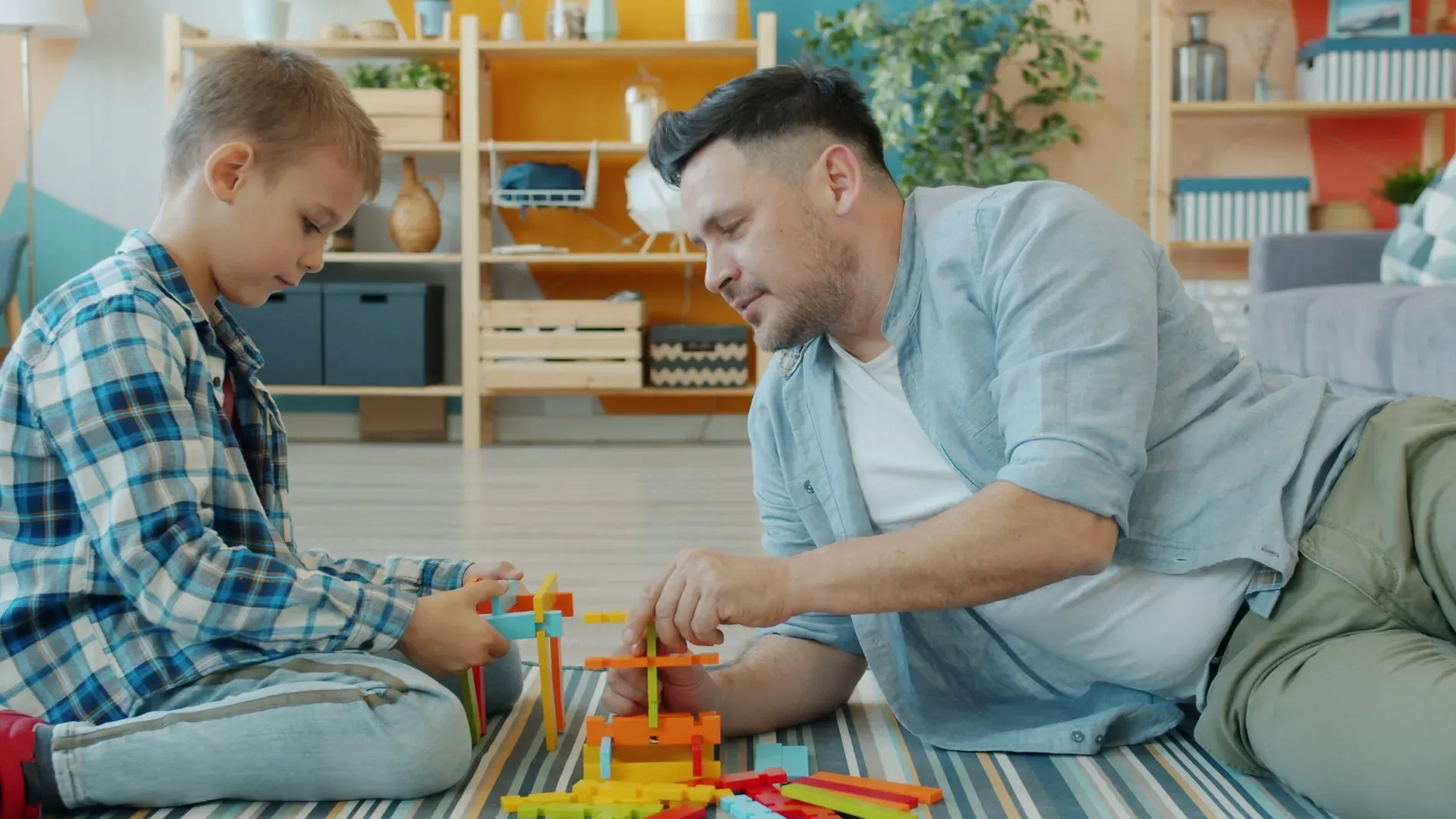
- We start where your child already is: their interests, their pace, their yes.
- You learn to read early signals, so support happens before the storm, not after.
- Skills are taught through play and paired with the positive, to facilitate success.
- You learn to respond to behaviors in a calm and controlled way without reinforcing the negative.
- When something is not working, we change the plan, not the child.

Questions Parents Ask About The Approach
What is assent-based practice in behavior support?
Assent-based practice means the child's willing participation is acknowledged and forceful follow-through isn't the first resort. Practitioners watch for assent (the child is happy and engaged) and assent withdrawal (turning away, distress, escape behavior), and treat withdrawal as information: the approach changes until the child genuinely opts in. This grew from Dr. Greg Hanley's research and is reshaping how quality behavior support is delivered.
Why does trauma-informed care matter for autistic children?
Many autistic children have lived through repeated overwhelming experiences: sensory overload, being restrained or forced through demands, constant correction. A trauma-informed lens assumes stress may sit underneath the behavior and builds safety first, because no child learns new skills while their nervous system is in survival mode.
Do I have to fully ignore hard behavior?
No. Neurodiversity-affirming practice means being precise about what needs to change to best support your child to be successful. Dangerous and distressing behavior gets addressed to ensure safety and de-escalation.
Should I try to stop my child's stimming and autistic traits?
No, as long as they are not harmful to your child. Autistic traits like stimming, honest refusal, or intense interests do not become goals just because they look different. In fact, these can be helpful for your child to regulate and can be strengths! The target is increasing your child's resilience and teaching the missing skills. We never aim to change their autistic identity.
Who is Dr. Greg Hanley?
Dr. Greg Hanley is a behavior analyst whose research reshaped how severe problem behavior is assessed and treated. His practical functional assessment (PFA) and skill-based treatment (SBT) model, developed with colleagues and taught through FTF Behavioral Consulting, centers safety, dignity, and the child's assent, and has been adopted by practitioners worldwide. Jess's severe-behavior work is informed by this model.
What Families Say
From the beginning, Jess was kind, thoughtful, and patient, and she quickly developed a strong rapport with our daughter. … We would highly recommend Jess to other families looking for a compassionate and effective therapist.
David MWe had Jess working with us to help out with behavioural therapy for several months and it was fantastic! … We saw so much progress working with Jess and I wouldn't hesitate to recommend her services.
Nicholas RanicarI love love love the flexible and fixed strategy learning. We have been working hard on changes this week. … We have made huge gains.
C.R.
See what assent-based support feels like
The discovery call practices what it preaches: no pressure, no scripts, just a real conversation about your child.
Book your free discovery call